

Усилители мощности стерео — Burmester 216
Описание, изображения, технические характеристики и спецификации
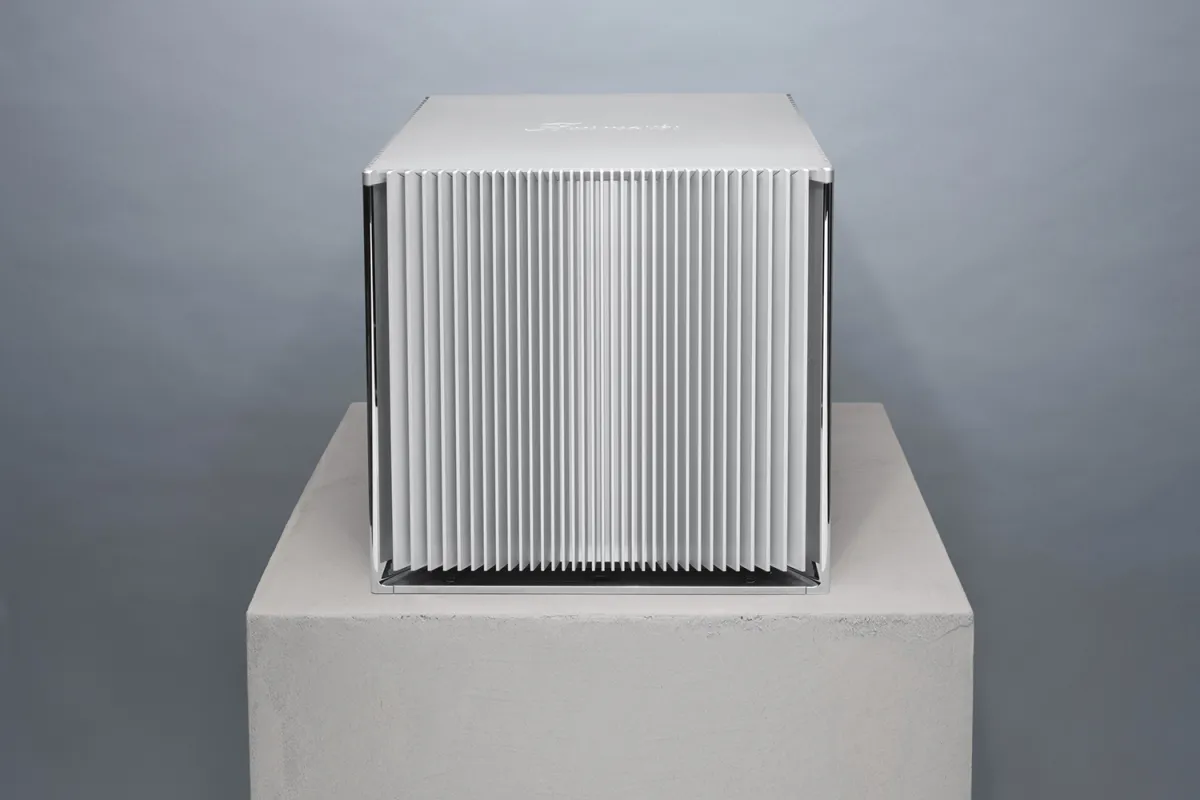
Burmester 216
Источник изображения — © Burmester
Key specs that matter
In stereo the 216 is rated at 100 W per channel into 8 ohm, 165 W into 4 ohm and 245 W into 2 ohm. Bridged for mono use it reaches a maximum continuous output of 490 W. Signal enters through balanced XLR sockets only, and an adapter handles single-ended sources. The case measures 496 mm wide, 191 mm high and 479 mm deep, and the unit weighs 35 kg. Power consumption in standby is 0.46 W, and versions are built for 230-240 V, 110-120 V and 100 V mains at 50 or 60 Hz.
Engineering and use context
The circuit is completely symmetrical from input to output. Its input stages work in Class A and use Burmester X-Amp modules first developed for the 159. The signal path is DC-coupled, so no capacitors sit between input and speaker terminals. Burmester states that the damping factor stays high across the whole frequency range and that the amplifier runs stably into any load, which is why it targets speakers with low impedance and complex load curves. Solid screw terminals take the speaker cables. The top panel is brushed aluminium with integrated heat sinks, the lid is finished without visible screws, and mirrored glass completes the front. A trigger input lets a Burmester preamplifier switch the 216 on and off remotely, a BurLink interface allows external control, and the amplifier can be integrated into smart home systems. Each unit is assembled by hand from components selected to narrow tolerances, then goes through several days of test runs, further quality checks and a final listening test before it leaves Berlin. The US warranty period is two years.
Pairing
Any partner preamplifier should offer XLR outputs, since the 216 lacks native RCA inputs, and Burmester's own models also make use of the switching trigger. The rising output into lower impedances suits speakers whose impedance falls well below nominal. For larger speakers, a second 216 allows both amplifiers to run bridged in mono mode, with one chassis dedicated to each channel.
Alternatives
The Burmester 218 is the larger, higher-output stereo model of the Top Line.
Характеристики
Название модели
216
Чувствительность входа (mV)
N/A
Входное сопротивление (балансное) (Ω)
N/A
Входное сопротивление (небалансное) (Ω)
N/A
Выходное сопротивление (балансное) (Ω)
N/A
Выходное сопротивление (небалансное) (Ω)
N/A
Максимальный ток (A)
N/A
Выходная мощность (8Ω) (W)
100
Выходная мощность (4Ω) (W)
165
Усиление (dBu)
N/A
Нижняя граница частотного диапазона +/- 3дБ (Hz)
N/A
Верхняя граница частотного диапазона +/- 3дБ (Hz)
N/A
Отношение сигнал/шум (dB)
N/A
Коэффициент гармонических искажений + шум (0% обратной связи) (%)
N/A
Коэффициент гармонических искажений + шум (100% обратной связи) (%)
N/A
Максимальное энергопотребление (W)
N/A
Коэффициент демпфирования
N/A
Габариты (mm)
496 × 191 × 479
Вес (kg)
35
Официальная ссылка
Другие компоненты
Усилители мощности стерео
Burmester 259

Усилители мощности стерео
Burmester 036

Усилители мощности стерео
Burmester 956 MK2
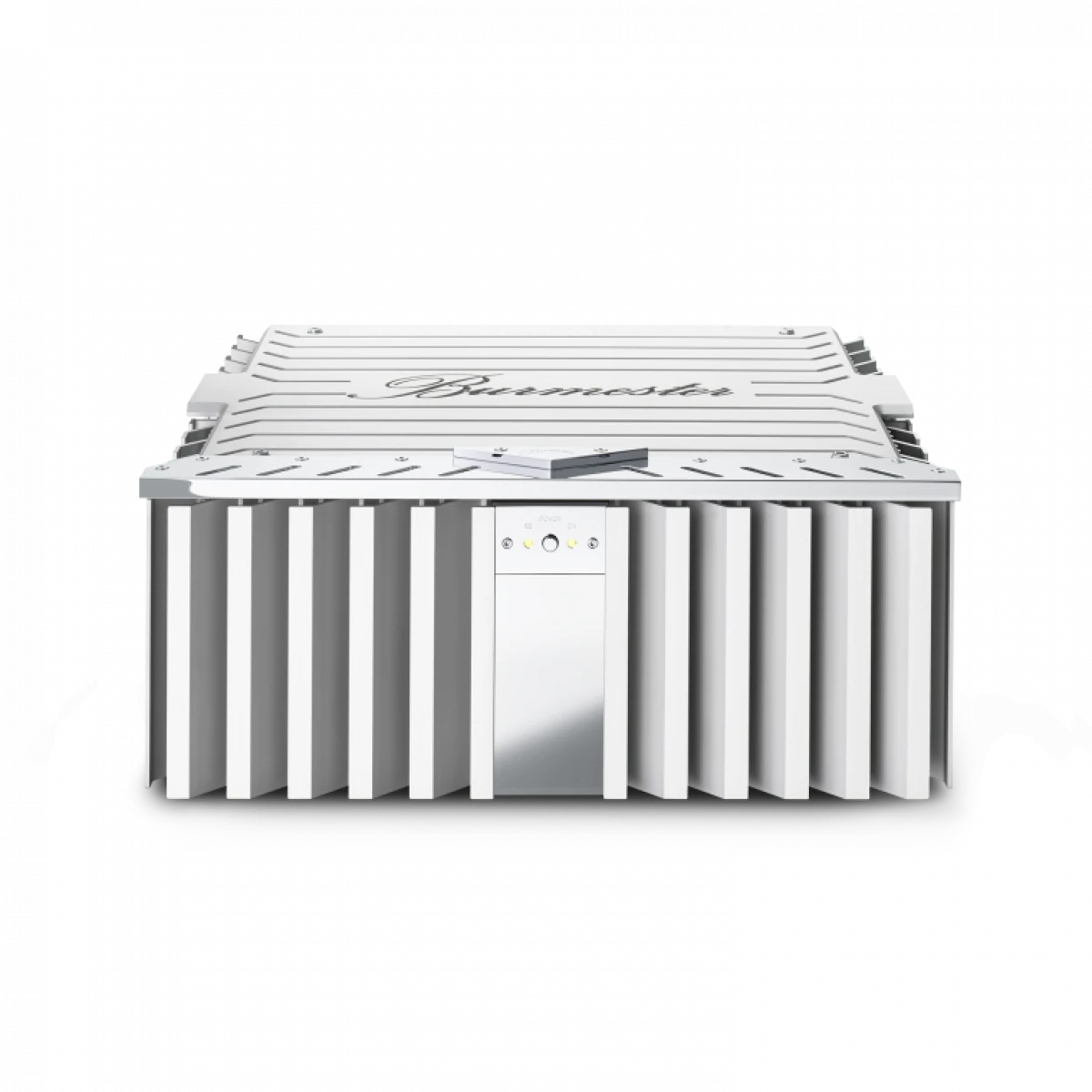
Усилители мощности стерео
Burmester 911 MK3
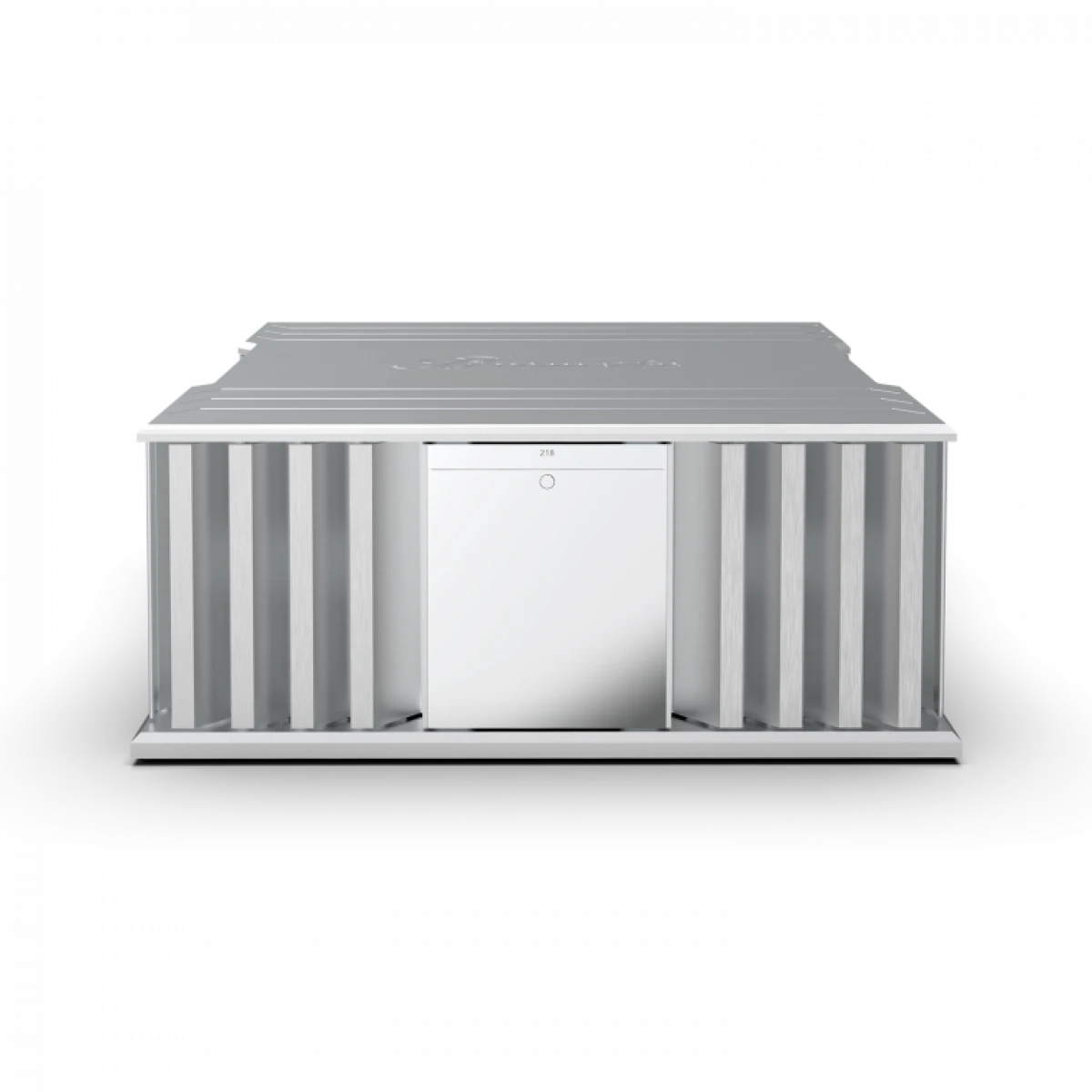
Усилители мощности стерео
Burmester 218