

Интегральные усилители — Audio Research I/50
Описание, изображения, технические характеристики и спецификации
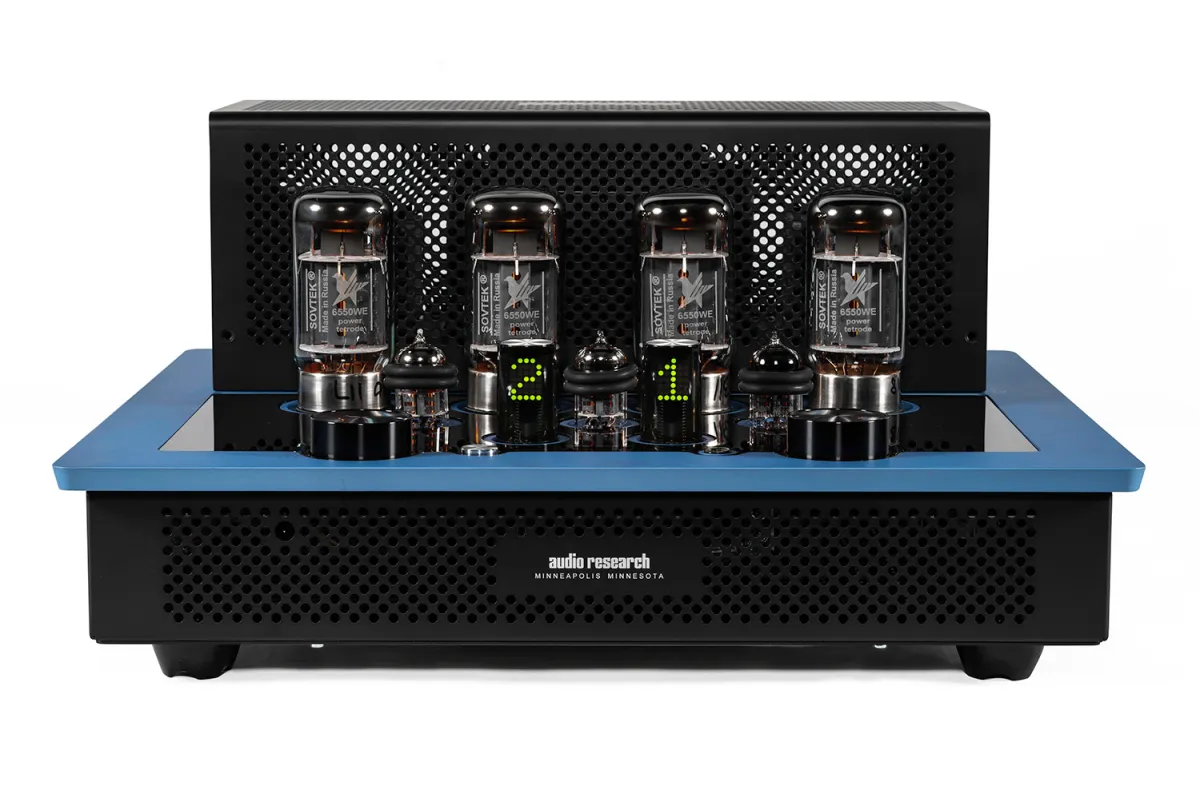
Audio Research I/50
Источник изображения — © Audio Research
Key specs that matter
Rated output is 50 W per channel continuous from 20 Hz to 20 kHz. The output stage uses two matched pairs of 6550WE tubes, while three 6922 dual triodes serve as one input and two driver tubes. Frequency response at 1 W is 7 Hz to 30 kHz at -3 dB, and power bandwidth is 10 Hz to 22 kHz. THD at 1 kHz is typically 1% per channel at rated output and below 0.1% at 1 W. Input sensitivity is 1.25 V RMS, with input impedance of 100 kOhm balanced and 48 kOhm single ended. The case is 420 mm wide, 225 mm high and 360 mm deep, and it weighs 18.1 kg.
Engineering and use context
All of the audio circuitry, from input to output, is based on tubes. Around the back are one balanced XLR input, two RCA line inputs and a further RCA input configured as a pass-through. The loudspeakers connect to separate 4 ohm and 8 ohm taps on the output transformers, so the owner chooses the tap that suits the nominal load rather than relying on one winding. Headphones plug into a 6.35 mm jack. Two LexieTubes form the display, indicating which input is active and how high the level is set. The architecture is modular, with an optional moving magnet phono board offered at USD 800 and a D/A converter module announced for release in 2022. The output tubes need periodic bias checks, which on this model are carried out by hand. Mains supply is 105 to 130 V at 60 Hz or 210 to 250 V at 50 Hz, and the amplifier draws 252 W at rated output.
Pairing
MM cartridge owners can connect a record player directly once the phono board is fitted, and a home theatre processor can share the system through the pass-through input, which holds a fixed gain. Loudspeakers with reasonable efficiency make best use of its moderate tube power, and the choice of taps covers both common nominal loads. Any source with an XLR output sees a high input impedance, which it can drive easily. Digital sources need an external DAC unless the converter module is installed.
Alternatives
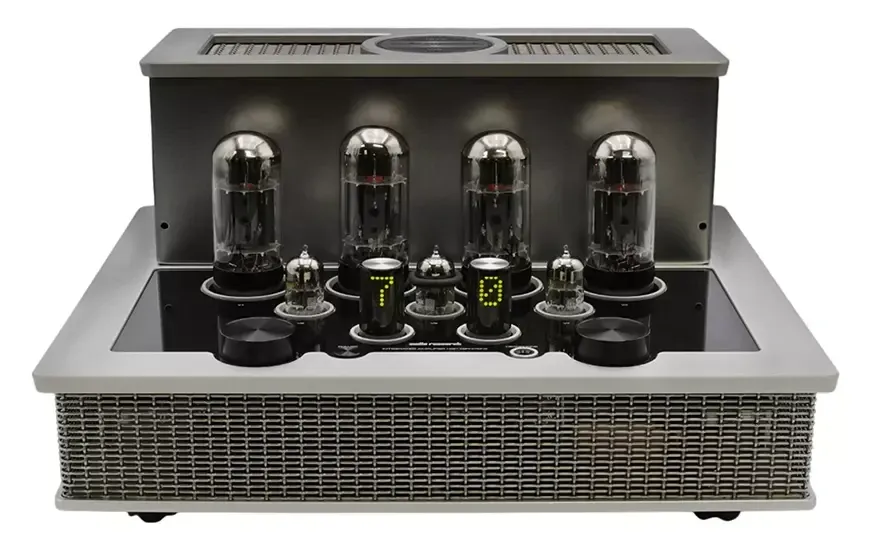
The Audio Research I/70 steps up in the same catalogue with KT120 tubes for 70 W per channel.
Характеристики
Название модели
I/50
Тип
push-pull tube integrated amplifier
Аналоговые входы (балансные)
N/A
Аналоговые входы (небалансные)
N/A
Чувствительность входа (mV)
1250
Входное сопротивление (балансное) (Ω)
100 000
Входное сопротивление (небалансное) (Ω)
47 000
Выходное сопротивление (балансное) (Ω)
N/A
Выходное сопротивление (небалансное) (Ω)
N/A
Цифро-аналоговое преобразование
Н/д
Входное сопротивление Phono MM/MC (по току) (Ω)
N/A
Выходная мощность (8Ω) (W)
2 х 50
Выходная мощность (4Ω) (W)
2 х 50
Усиление (dBu)
N/A
Нижняя граница частотного диапазона +/- 3дБ (Hz)
7
Верхняя граница частотного диапазона +/- 3дБ (Hz)
30000
Отношение сигнал/шум (dB)
N/A
Коэффициент гармонических искажений + шум (%)
1
Коэффициент демпфирования
N/A
Габариты (mm)
430 x 180 x 340
Вес (kg)
18.1
Официальная ссылка
Связанные материалы
Top 7 Tube Integrated Amplifiers for Music Lovers
Ranking in 2026
Топ-7 интегрированных ламповых усилителей для любителей музыки
Рейтинг на 2026 год
Audio Research I/55 – Tube Integrated Amplifier with DAC and Phono Stage
Audio Research I/55 – Интегрированный ламповый усилитель с ЦАП и фонокорректором
Review: Audio Research I/50 tube-based integrated amplifier
Classic push-pull scheme works overwhelmingly well
Обзор: интегрированный усилитель на лампах Audio Research I/50
Классическая схема с параллельным включением работает исключительно хорошо
Другие компоненты
Интегральные усилители
Audio Research I/55
Интегральные усилители
Audio Research I/70