

Vollverstärker - Canor Audio Virtus A3
Beschreibung, Bilder, technische Daten und Spezifikationen
Canor Audio Virtus A3
Bildquelle - (c) Canor Audio
Key specs that matter
Output power is 2 x 100 W into 8 ohms and 2 x 150 W into 4 ohms (IHF dynamic power). Gain is 34.5 dB, input sensitivity 550 mV and input impedance 50 kohms. Frequency range is 10 Hz - 35 kHz (±0.5 dB, 5 W), THD is below 0.008% (1 kHz, 1 W) and signal-to-noise ratio is above 90 dB (20 Hz - 20 kHz). Damping factor is 380 (8 ohms) and 180 (4 ohms). Phono gain is 40 or 46 dB for MM and 60 or 66 dB for MC. Analogue inputs are two pairs XLR, two pairs RCA and one pair RCA phono, and the variable outputs are one pair RCA and one pair XLR. Digital inputs are two coaxial, two optical and one AES/EBU (PCM to 24-bit/192 kHz) plus USB-C (PCM to 32-bit/768 kHz, native DSD512). Headphone outputs are 6.3 mm and 4-pin XLR, rated 500 mW and 650 mW into 30 ohms. The tube complement is two E88CC. It measures 435 x 130 x 460 mm (W x H x D) and weighs 18 kg.
Engineering and use context
A tube-based balanced differential input stage drives a Class A Current Dumping output stage. Its low-power class A amplifier is always in control of the speaker load, and a high-power class AB stage provides the load current, with no transition between operating modes. Differential feedback senses the output on both speaker terminals. According to Canor, tubes were chosen for the input partly for their low sensitivity to external RF interference. The output stage has a custom flat-coil inductor.
Inputs are selected by relays connected symmetrically to discrete class A JFET zero-feedback buffers, and volume is set by a differential analogue step attenuator. The design is fully DC coupled with DC servos, and no IC op-amps sit in the direct signal path. Its USB input is galvanically isolated, RF-filtered and re-synchronised to a local low-phase-noise clock. Both ES9038Q2M DACs run in current mode. Cooling uses heat-pipe heatsinks and low-RPM fans, and the knob has CCD-based position sensing in a double-row bearing.
Pairing
The variable outputs connect external power amplifiers for active speakers or a subwoofer. Its phono input accepts MM and MC cartridges, with loading selected from the front panel.
Alternatives
The AI 2.10 is Canor's tube integrated amplifier in the same Performance Line.
Spezifikationen
Modellbezeichnung
Virtus A3
Typ
Integrated Amplifier with DAC and Phono
Analogeingänge (symmetrisch)
2
Analogeingänge (unsymmetrisch)
2 + 1 (Phono)
Eingangsempfindlichkeit (mV)
550
Eingangsimpedanz (symmetrisch) (Ω)
50 000
Eingangsimpedanz (unsymmetrisch) (Ω)
50 000
Ausgangsimpedanz (symmetrisch) (Ω)
N/A
Ausgangsimpedanz (unsymmetrisch) (Ω)
N/A
D/A-Wandlung
Ja
Phono MM/MC-Eingangsimpedanz (stromgekoppelt) (Ω)
N/A
Ausgangsleistung (8Ω) (W)
100
Ausgangsleistung (4Ω) (W)
150
Verstärkung (dBu)
34.5
Untere Grenzfrequenz +/- 3dB (Hz)
10
Obere Grenzfrequenz +/- 3dB (Hz)
35 000
Signal-Rausch-Abstand (dB)
> 90
Klirrfaktor + Rauschen (%)
< 0.008 % / 1 kHz, 1 W
Dämpfungsfaktor
N/A
Abmessungen (mm)
435 x 130 x 460
Gewicht (kg)
18
Offizieller Link
Weitere Komponenten
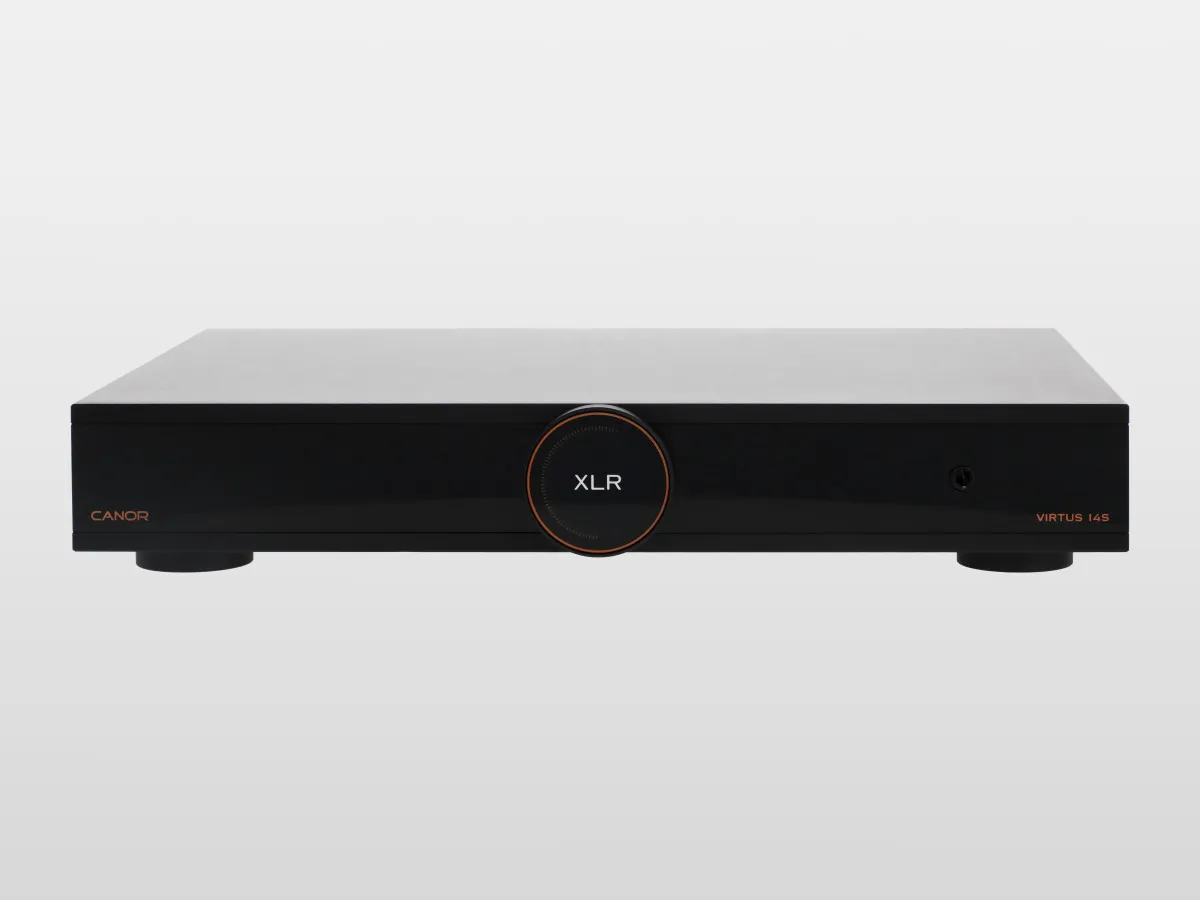
Vollverstärker
Canor Audio Virtus I4S
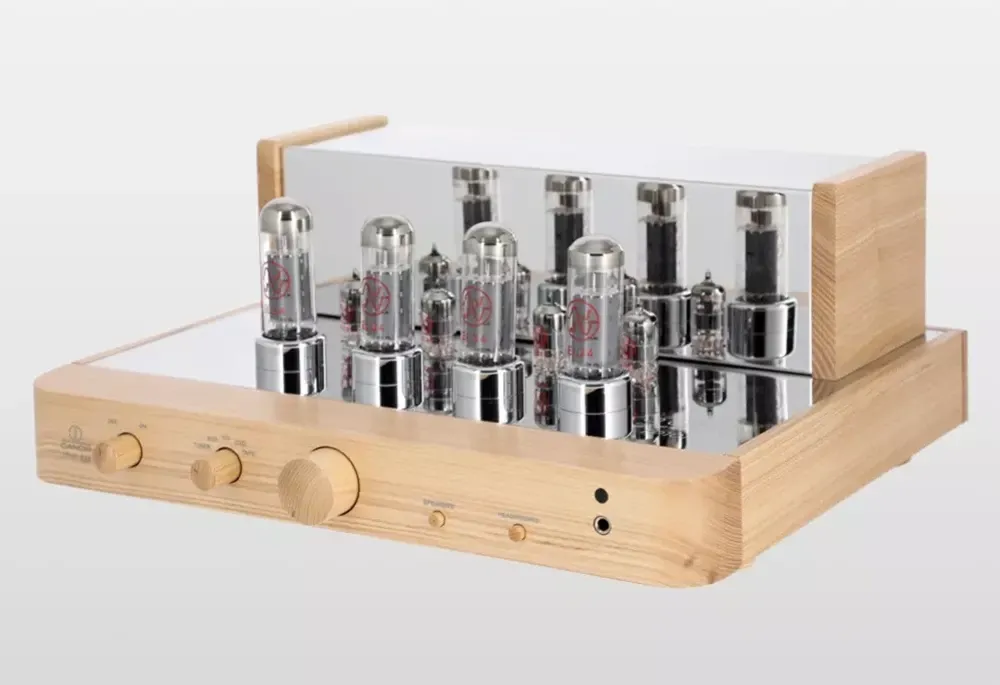
Vollverstärker
Canor Audio TP101 A30
Vollverstärker
Canor Audio AI 2.10
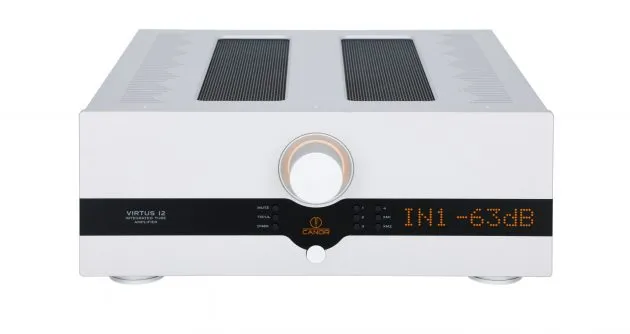
Vollverstärker
Canor Audio AI 1.10

Vollverstärker
Canor Audio AI 1.20